
How to Get Empadronado in Madrid (Step by Step, Without the Guesswork)
If you’re setting up life in Madrid, empadronamiento is one of those things people assume you already understand.
They don’t explain it.
They just ask for it.
This guide explains how to get empadronado in Madrid, step by step, based on how it actually works in real life. Not the ideal version. The everyday one.
This isn’t hard.
But it is specific.
What Empadronamiento Is (Plain English)
Empadronamiento means registering your address with the city.
You’re added to the padrón municipal, which is Madrid’s official record of who lives where.
In practice, it tells the city:
you live at a specific address
in a specific district
at a specific moment in time
It is:
not a visa
not residency status
not tied to your nationality
It’s an address registration. Nothing more.
Why You’re Asked for It So Often
Once you’re empadronado, you’ll be asked for the certificate for things like:
NIE or TIE applications
EU registration (“Green NIE”)
public healthcare
school enrollment
some bank or admin procedures
Offices rarely explain why they need it.
They just assume you have it.
Do You Actually Need to Be Empadronado?
You should get empadronado if you:
live in Madrid (even short or medium term)
are doing immigration or admin paperwork
plan to stay longer than a few months
You might not need it yet if you:
just arrived
are staying very short-term
don’t need to deal with admin yet
Most people end up needing it sooner than expected.
Before You Start: Which Situation Are You In?
This matters more than nationality.
1. Your name is on the lease or you own the place
This is the simplest case.
2. You live with someone else (shared flat, partner, family)
You’ll need:
a signed authorization from the person on the lease or deed
a copy of their ID
This is very common in Madrid.
3. You’re subletting or don’t have a contract
This is trickier, but not impossible.
Outcomes can vary by district and office.
Some clerks are flexible. Some aren’t.
We explain what usually helps below.
Where Empadronamiento Is Done in Madrid
Empadronamiento is handled by the Ayuntamiento de Madrid, through local Oficinas de Atención a la Ciudadanía (OAC).
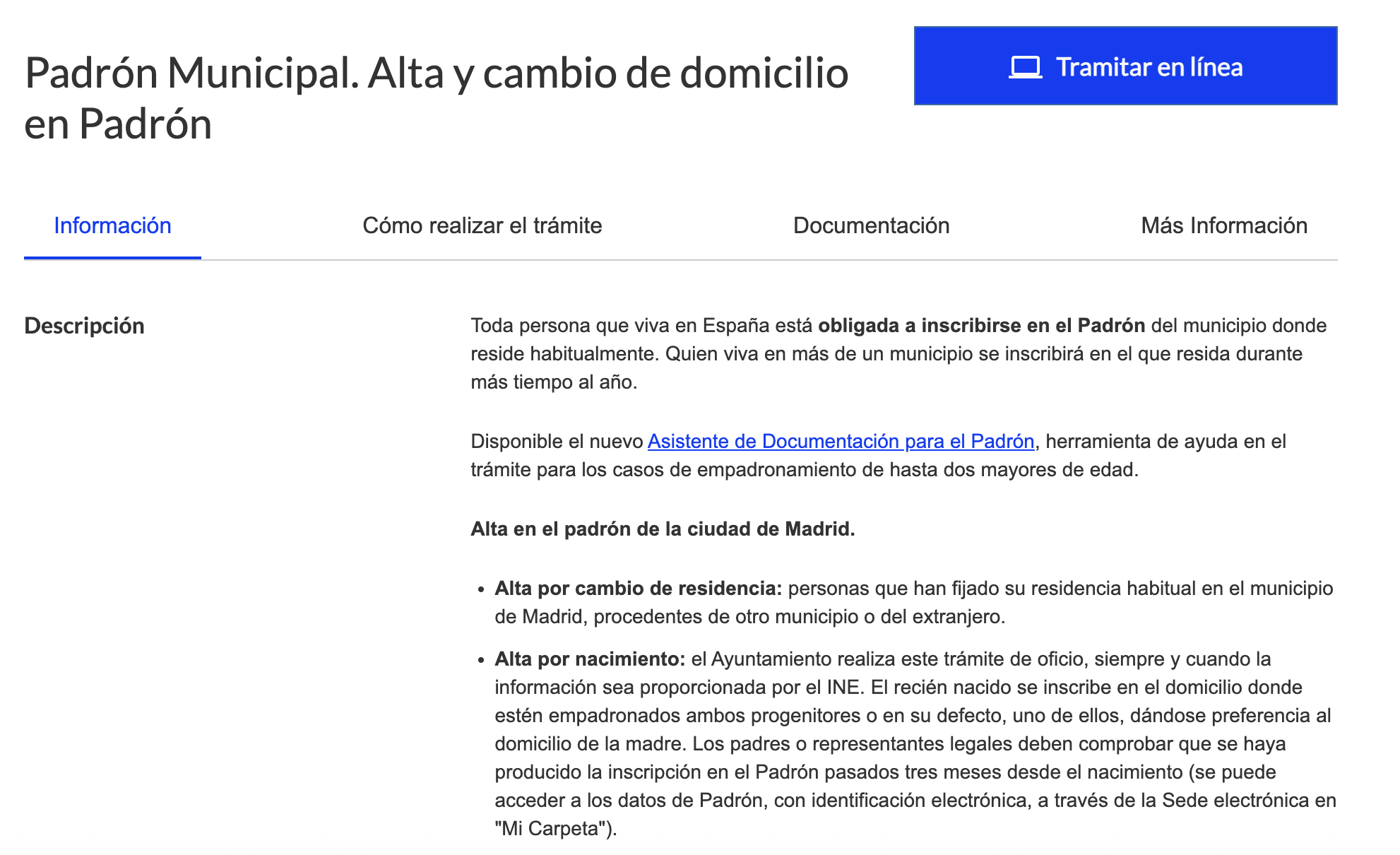
Official city information page: https://sede.madrid.es/portal/site/tramites/menuitem.62876cb64654a55e2dbd7003a8a409a0/?vgnextoid=3e3debb41f6e2410VgnVCM2000000c205a0aRCRD&vgnextchannel=775ba38813180210VgnVCM100000c90da8c0RCRD&vgnextfmt=default
(Search: Alta o cambio de domicilio en el Padrón)
Appointments are tied to your address, not your nationality.
Step by Step: How to Get Empadronado in Madrid
Getting empadronado (registering your address on the city register) is one of the first real admin steps in Madrid.
If you’re applying for residency later, this usually comes before anything immigration-related.
Not because it’s complicated.
Because other offices expect it to already be done.
Here’s how it works in real life.
Step 1: Book a Cita Previa (Appointment)
Empadronamiento is handled by the Ayuntamiento de Madrid, through local citizen service offices.
You book online here: https://servpub.madrid.es/GNSIS_WBCIUDADANO/tramiteDia.do
What to select:
Tipo de servicio: Padrón
Gestión: Alta, baja o cambio de domicilio en el Padrón
You’ll then choose an Oficina de Atención a la Ciudadanía (OAC).
Good to know:
If your nearest office has no availability, choose “cualquier oficina”.
A short metro ride is often faster than waiting weeks.
You’ll be asked for:
your passport or ID number
contact details
a confirmation code will be sent to you
Save the confirmation. You’ll need it.
Step 2: Prepare Your Documents (Bring Paper Copies)
Madrid still works on paper. Bring physical copies.
You’ll usually need three things:
1. Proof of identity
Passport or
National ID card
Original + copy is safest.
2. Empadronamiento form
Solicitud de empadronamiento
Signed by all adults registering at the address
(Some offices provide it there, but filling it in advance helps.)
3. Proof of address
This is where situations differ:
If you rent:
Rental contract (signed by both parties)
Sometimes a rent receipt or utility bill helps
If you own:
Property deed (escritura) or
Nota simple
If you live with someone and you’re not on the lease:
Signed authorization from the leaseholder or owner
Copy of their ID
Copy of their rental contract or deed
Official Madrid authorization form: https://sede.madrid.es/UnidadesDescentralizadas/UDCEstadistica/TramitesMunicipales/Ficheros/FORMULARIOAUTORIZACIONPARAEMPADRONAMIENTO.pdf
This situation is very common in Madrid. Clerks see it every day.
Step 3: Go to the Appointment
Go to the OAC you selected.
What it’s usually like:
calm
quick
very procedural
What happens:
the clerk checks your documents
confirms the address
enters your details into the system
Most appointments take 10–15 minutes.
Spanish is the default language, but you’re not expected to explain your life story.
Clear documents matter more than perfect Spanish.
Step 4: Get Your Empadronamiento Certificate
You’ll usually receive a volante de empadronamiento.
This is:
a free paper document
proof that you’re registered at that address
Sometimes you get it immediately.
Sometimes you’re told to download it later online.
Important:
Many offices that ask for the padrón want it issued within the last 3 months.
If you’re using it for residency or immigration, plan to request a fresh copy close to your next appointment.
Step 5: What This Unlocks Next
Once you’re empadronado, you’re officially “in the system” for Madrid.
You can now:
proceed with residency steps (EU or non-EU)
book police or extranjería appointments that require a Madrid address
use the padrón certificate for healthcare, schools, and other admin
For EU citizens, this usually means moving on to the
Certificado de Registro de Ciudadano de la UE (“Green NIE”).
The police will check that:
your address
and your padrón
match.
A Quick Reality Check
If something doesn’t work the first time, it doesn’t mean you failed
Different offices explain things differently
Calm + correct paperwork usually wins
Empadronamiento feels small, but it unlocks a lot.
Once it’s done, everything else gets lighter.
Read More





Learning Spanish before moving to Spain is not about fluency. It is about navigating paperwork, appointments, and everyday admin with confidence, clarity, and far less stress.